PPIM 2025: Introduction of a Portable Field Instrument for In-ditch Pipe Body Toughness Determination
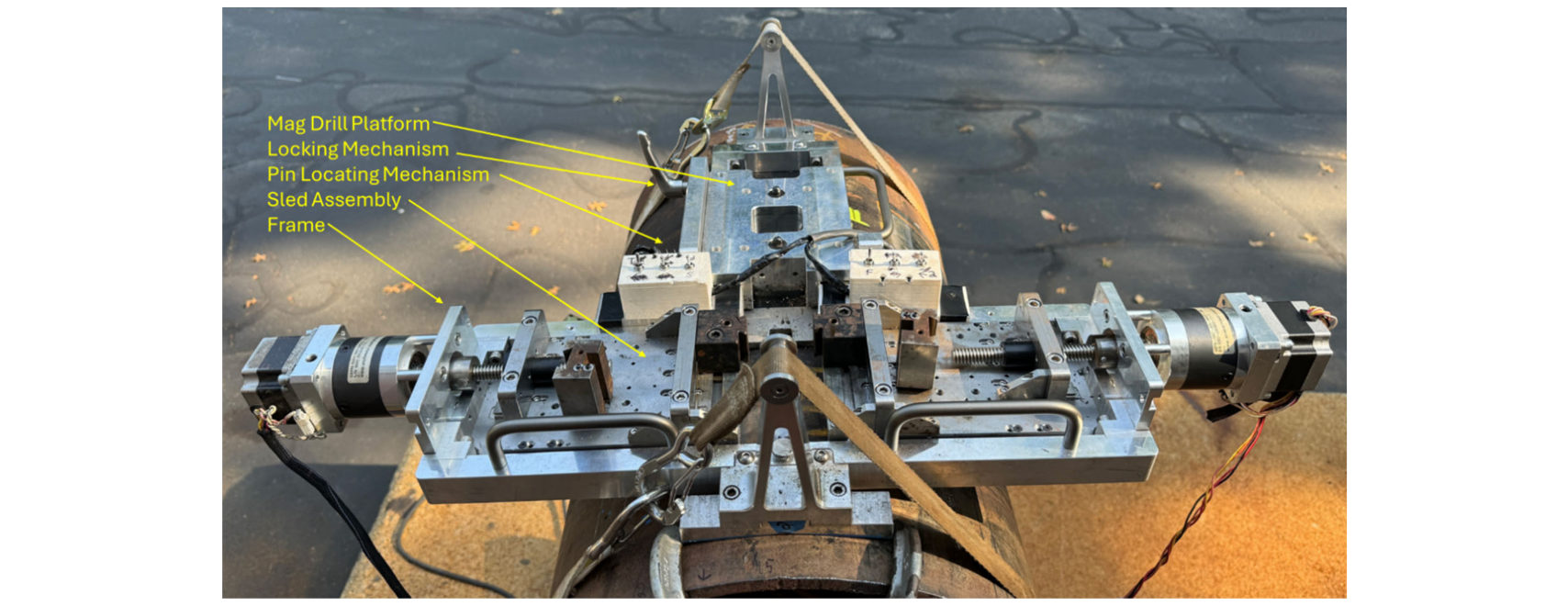
Accurate fracture toughness data is crucial for pipeline integrity assessments, particularly as modern inline inspection (ILI) tools detect increasingly smaller cracks. Traditional methods for obtaining this data often require destructive testing, such as pipe cutouts, which can be costly and impractical. This paper introduces a portable field instrument, the Blade Toughness Meter (BTM), which allows for in-ditch, non-destructive determination of pipe body toughness.
The BTM employs the planing-induced microfracture method, in which a specially designed blade planes a small “island” of material on the pipe surface, creating a controlled microfracture. By analyzing the fractured ligaments left behind, key toughness characteristics can be determined. The study examines correlations between ligament height, roughness, and fracture surface morphology with lab-tested fracture toughness values.
Preliminary field trials on over 60 pipeline specimens demonstrate strong correlation between BTM-generated data and destructive lab testing (ASTM E1820). The tool’s portability and efficiency make it a practical alternative for pipeline operators, enabling real-time toughness assessments to support fitness-for-service (FFS) evaluations and regulatory compliance without the need for costly pipe cutouts. Further machine learning models are being developed to enhance its predictive capabilities, making this technology a significant advancement in pipeline integrity management.
Download the Presentation for PPIM 2025
Xuejun Huang1, Bryan Feigel1, Aidan Ryan1, Intisar Rizwan I Haque1, Ryan Lacy1, Simon Bellemare1
1Massachusetts Materials Technologies, LLC